Ontario summers have become a cooling problem as much as winters are a heating one. Windows and doors are the main way heat gets into a house in July: through the glass as sunlight, through gaps as hot air, and through dark frames as conducted heat. A little spring prep, and the right glass and shading choices, can keep rooms comfortable and cut air conditioning bills noticeably. Here’s the checklist.
How Summer Heat Gets In
Three routes. Solar gain through glass is the biggest: a west-facing window can admit more heat on a July afternoon than a small space heater puts out. Air leakage lets hot, humid air in and conditioned air out, and humidity is what makes an Ontario summer feel oppressive indoors. Conduction through frames and glass is the smallest of the three but is worst on dark frames and single-pane glass.
Spring Checklist for Windows and Doors
- Wash the glass and frames inside and out. Grime on the glass absorbs heat; dirt in tracks stops sliders sealing.
- Check weatherstripping and sweeps the same way you would for winter; the same gaps that let cold in let humid air in.
- Inspect exterior caulking after the freeze-thaw season, and recaulk any cracks before summer storms.
- Lubricate hardware (silicone spray on tracks, a drop of oil on casement operators) so windows open easily for night ventilation.
- Clear weep holes at the bottom of window frames with a toothpick so summer rain drains out.
- Test every window opens, especially bedroom egress windows.
Screens
Fit or reinstall screens, check for tears (patch kits are cheap), and make sure they seat tightly. If bugs are a problem, 20-by-20 mesh keeps out no-see-ums. For sun-facing windows, solar screens (a dense dark mesh) block 65 to 90 percent of solar heat before it reaches the glass while still allowing ventilation and a view. They’re the cheapest effective shading upgrade for an existing window.
Shading: Outside Beats Inside
Blinds and curtains help, but by the time sunlight hits an interior blind it’s already through the glass and the heat is in the room. Shading outside the glass stops it before it enters:
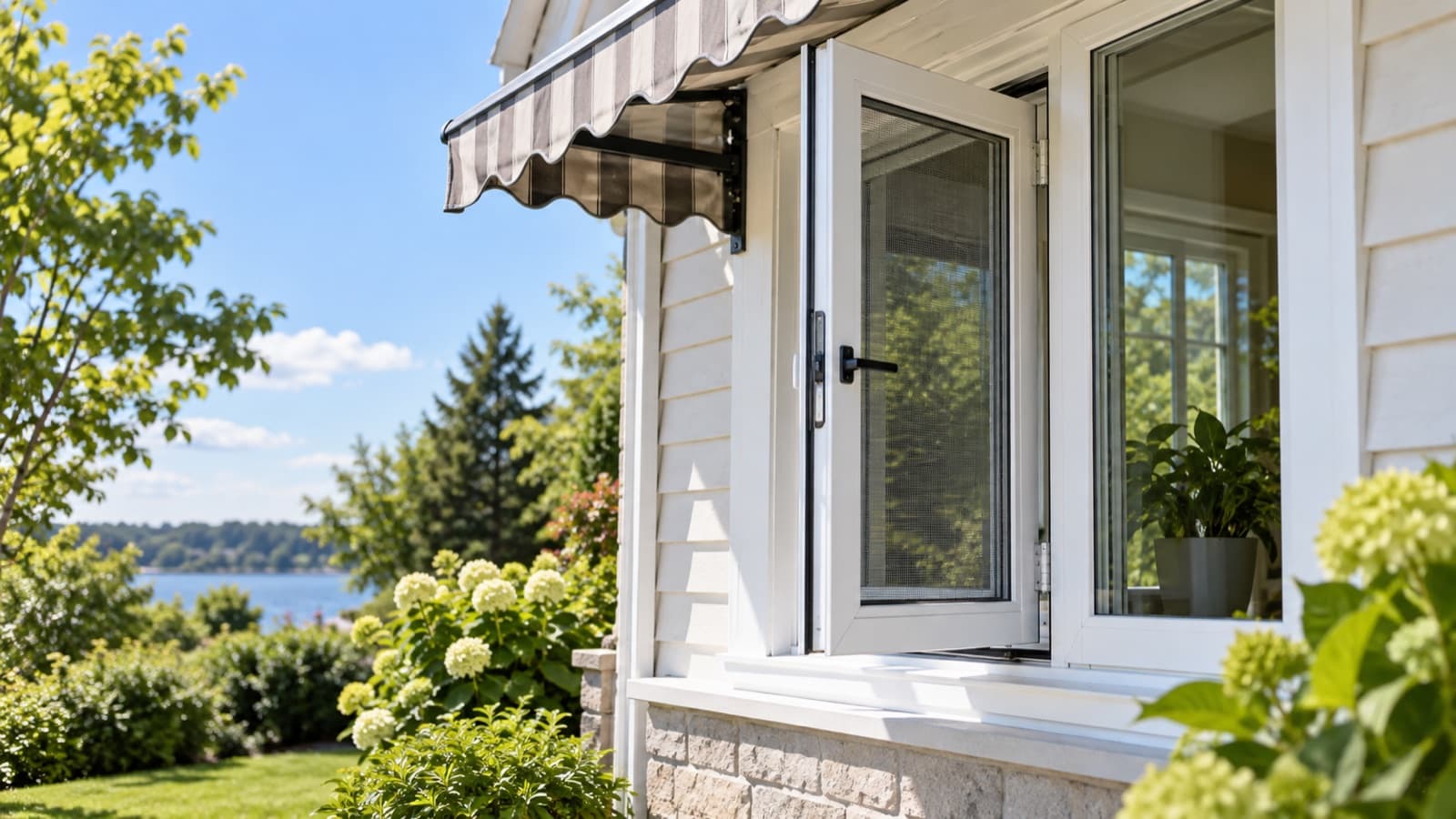
- Awnings over south and west windows can cut solar gain on those windows by more than half. Retractable ones give winter sun back.
- Exterior roller shades or shutters on west windows.
- Deciduous trees and pergolas shade in summer and drop their leaves for winter sun.
- Deep overhangs on south windows block high summer sun and admit low winter sun, which is why they’re on every well-designed Ontario house.
Inside, light-coloured, reflective-backed blinds and cellular shades are the best of the interior options, and closing them before the sun hits the window is the habit that matters.
Glass Choices for Hot Walls
If you’re replacing windows, the summer decision is the Solar Heat Gain Coefficient (SHGC). It’s the fraction of solar heat the glass lets through. For west- and south-west-facing windows that overheat, choose a Low-E coating with a lower SHGC, around 0.25 to 0.35, which blocks most of the infrared while still passing visible light. For south windows, a moderate SHGC keeps useful winter sun. Never put a low-SHGC glass on north windows; you give up light for nothing. Most manufacturers offer two or three Low-E options, and a good quote assigns them wall by wall. Our ratings guide explains the labels.
Tinted and reflective films on existing windows also cut solar gain, but they can void sealed-unit warranties and cause thermal stress cracks on double-pane glass. Check with the manufacturer before applying film.
Ventilation and Night Cooling
On summer nights Ontario often drops to the mid-teens even after a 30°C day. Opening windows on opposite sides of the house after dark, with a fan pushing air out on the warm side, flushes the day’s heat and can let you leave the AC off until mid-morning. Casement windows are the best for this because they open fully and can be angled to catch a breeze; awning windows can stay open through a night shower. Close everything and drop the blinds by 9 a.m. before the outside air warms up.
Patio and Entry Doors
Sliding patio doors are large west-facing glass on many Ontario homes and are often the single biggest source of afternoon heat. A low-SHGC glass on replacement, an exterior shade, or a solar screen door makes a real difference. For entry doors, a dark steel door in full sun can get hot enough to warm the foyer; a light colour or fibreglass helps. Check door sweeps and weatherstripping; humid air leaking in around a door works your air conditioner hard.
When Replacement Is the Answer
If you have single-pane glass, clear double-pane with no Low-E, or old aluminum sliders on a west wall, no amount of prep will make those rooms comfortable. Modern Low-E glass with the right SHGC, casement or awning styles for ventilation, and tight seals fix the problem permanently and cut both cooling and heating bills. Late spring is a busy time to book, so plan ahead; see our timing guide.
Rooms Too Hot Every Summer?
We'll look at which walls are the problem and quote glass, style, and shading options that fix it. Free, no-pressure quotes in London and the GTA.