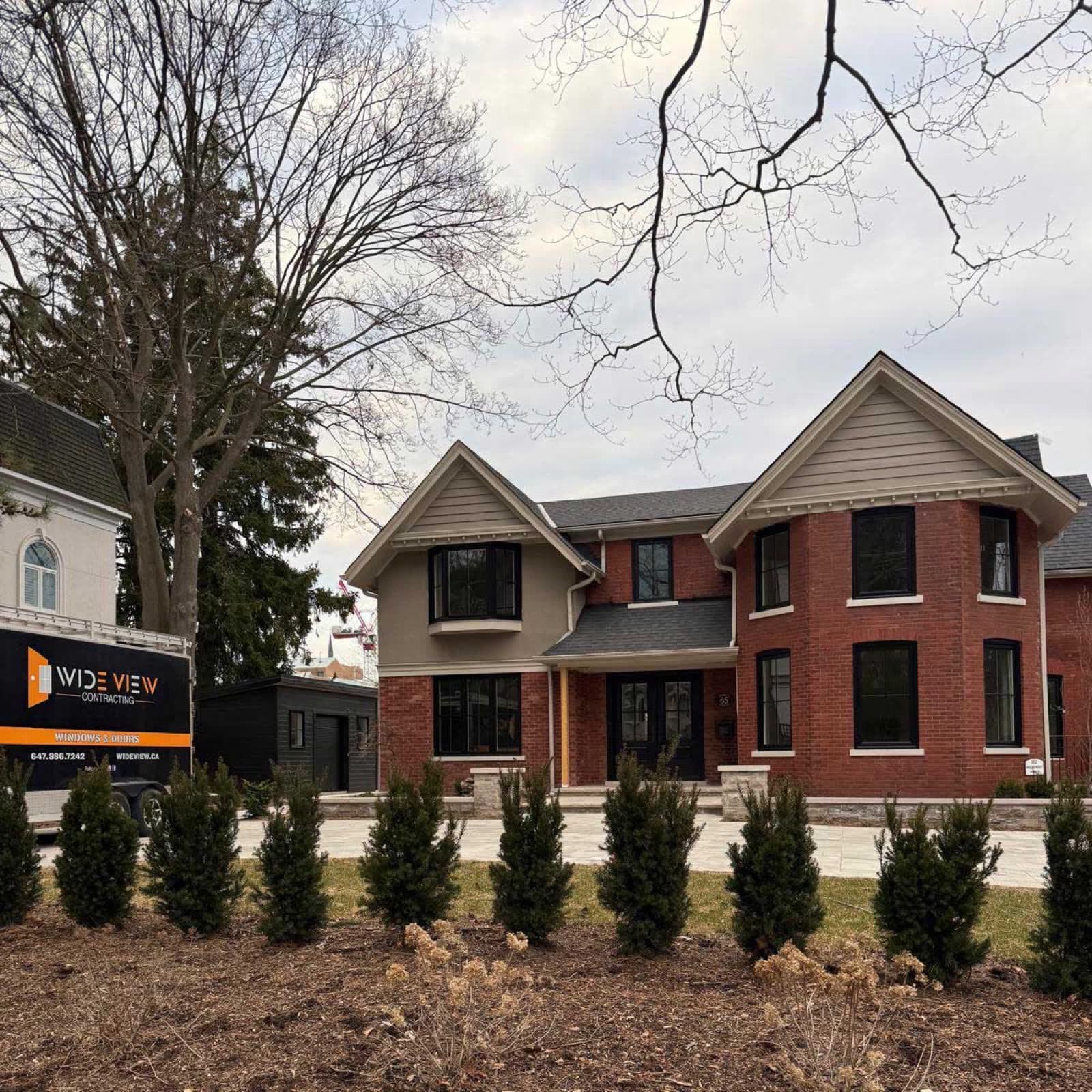
Old North, Wortley Village, and Woodfield in London. Cabbagetown, Riverdale, and Leslieville in Toronto’s east end. These neighbourhoods are full of red-brick Victorians, Edwardians, and 1920s workers’ cottages that people love precisely because they aren’t new. They also have single-pane wood windows that leak heat, rattle in the wind, and haven’t opened properly since the 1980s. Updating them without wrecking the character of the house, or running afoul of heritage rules, takes some planning. Here’s how to do it right.
First: Find Out Your Home’s Heritage Status
Under the Ontario Heritage Act, your house can be in one of three positions, and each one changes what you can do with the windows:
- Individually designated (Part IV). A by-law protects your specific property and lists its heritage attributes. If the windows are named as attributes, any change needs a heritage permit from the city.
- In a Heritage Conservation District (Part V). Your whole neighbourhood is designated. A district plan sets rules for alterations visible from the street, and window replacement is almost always covered.
- Listed but not designated. Your property is on the municipal heritage register as being of potential interest. A listing alone does not restrict window replacement; its main effect is a 60-day notice period before demolition.
You can check by searching the City of London or City of Toronto heritage register online, or by calling the heritage planning office. Do this before you order anything. Replacing windows in a designated property without a permit can mean an order to reverse the work at your own cost.
London’s Heritage Conservation Districts
London currently has seven designated Heritage Conservation Districts plus one study area: Bishop Hellmuth (the historic core of Old North), Blackfriars/Petersville, Downtown, East Woodfield, West Woodfield, Old East, and Wortley Village-Old South, with St. George-Grosvenor under study. That covers a large share of the city’s pre-1930 housing.
Take Wortley Village-Old South as the example, since it’s the largest and most recent. Its district plan requires a Heritage Alteration Permit for window replacement, and its conservation guidelines encourage repairing and retaining original wood windows while discouraging replacement with vinyl or aluminum-clad units on street-facing elevations. Installing, replacing, or removing storm windows does not require a permit. The city has also adopted supplementary guidelines that add flexibility to the permit process, and staff can approve many routine applications without a full committee review.
Toronto’s East End Districts
Toronto has 27 designated Heritage Conservation Districts. East of the Don, the ones that matter for windows are the five Cabbagetown districts (North, South, Northwest, Metcalfe, and Southwest, the last designated in 2024), Riverdale (2008), and in the Beaches, Kingswood Road South/Balmy Beach and Lyall Avenue. Leslieville’s Queen Street East corridor has been under study but was not a designated district at the time of writing, though many individual properties there are listed or designated.
Cabbagetown’s rules are a useful model for the others. According to the Cabbagetown Heritage Conservation District Committee, a heritage permit is needed for alterations visible from the street. Replacement windows and doors are expected to be painted wood, the original material throughout the district, and permits for more energy-efficient units are routinely approved as long as the design keeps the original character and the existing windows genuinely can’t be repaired. Non-street-facing elevations don’t need a permit, and seasonal storm windows are exempt. Toronto’s Heritage Grant Program can cover up to 50 percent of eligible restoration costs for designated properties, which sometimes makes restoring original sashes cheaper than replacing them.
The 2027 Listing Deadline
One wrinkle worth knowing about. Provincial changes under Bill 23 and Bill 200 mean that properties listed on a municipal heritage register but never formally designated will be removed from the register on January 1, 2027 unless the municipality starts the designation process first. Both London and Toronto have been reviewing their registers and designating properties they consider most significant. If you own a listed century home, you may receive a notice of intention to designate in the coming months, which would bring your windows under permit requirements. If you don’t, your property will likely drop off the register entirely in 2027. Either way, check your status before you plan the project.
Repair, Restore, or Replace?
Heritage planners and Natural Resources Canada both make the same point: if the original wood frame is sound, a high-performance insert or restored sash with a good storm window can perform very well and preserve the house. Old-growth wood in a 1905 window is denser and more rot-resistant than most lumber you can buy today. Restoration makes sense when:
- The frames and sills are solid and the sashes are only stuck, painted shut, or missing their weights and cords.
- The windows have stained glass, curved glass, or unusual muntin patterns that can’t be reproduced affordably.
- You’re in a district where the permit for full replacement would be difficult.
Replacement is the better call when sills and lower rails are rotten, frames are out of square from a century of settling, previous owners already swapped in mismatched aluminum or vinyl, or you need the airtightness and triple glazing that a restored single-pane sash with a storm can’t deliver. In our experience, a house that has had no window maintenance since the 1970s usually needs a mix: restore the showpiece front windows, replace the rest.
Matching the Look: What Actually Matters
Whether or not you need a permit, these are the details that make a new window disappear into an old house, or stick out:
- Operating style. Most Ontario century homes have hung windows, often two-over-two or one-over-one. Putting a casement or slider where a hung window was is the single most visible mistake.
- Divided-lite pattern. Match the original grille layout. Use simulated divided lites with exterior-applied bars and a spacer between the panes, not flat grilles sandwiched inside the glass, which read as fake from the sidewalk.
- Proportions. Keep the tall, narrow openings. Don’t fill in the top of an arched or segmental opening with a flat header and a rectangular window.
- Frame and brickmould profile. Old windows have a chunky exterior brickmould, often with a drip cap. Ask for a heritage brickmould profile rather than the slim modern one.
- Sightlines. Retrofit inserts add frame width. In a narrow opening that can look heavy. Full-frame replacement keeps the glass area closer to the original.
- Colour. Deep greens, oxblood reds, black, and cream were the historic palette. Bright white vinyl is the thing heritage committees push back on most.
Wood, Fibreglass, or Vinyl?
Wood / aluminum-clad wood
The default for designated properties and street-facing elevations in a district. Authentic profiles, paintable, and what heritage staff expect. Highest cost, and unclad wood needs repainting every 7 to 10 years. Best for permit approval.
Fibreglass
Stiff enough for tall, narrow hung units, paintable in dark heritage colours, and available with wood-look profiles and simulated divided lites. Many heritage planners accept it on secondary elevations, and some districts on front elevations case by case. Best balance for most century homes.
Vinyl
Fine on rear and non-visible elevations, and on non-designated homes where budget rules. Choose a hung style with a heritage brickmould and simulated divided lites. Dark colours are limited. Best for the back of the house.
Old-House Surprises to Plan For
Century homes don’t follow modern construction rules, and a crew that only works on subdivisions will get caught out. Things we plan for on every pre-1940 house:
- Lead paint. Any home built before the late 1970s can have lead-based paint on window trim. Removal requires containment and proper cleanup, not a belt sander.
- Solid brick walls with no framing. Double- and triple-wythe brick means deep openings, wood bucks set into the masonry, and jamb extensions far wider than standard. Measure every opening; no two are alike.
- Lath and plaster returns. Interior window returns are often plaster, not casing. Retrofit installs preserve them; full-frame installs need a plasterer or careful trim work.
- Weight pockets. Hung windows have hollow pockets beside the frame for sash weights. Left empty, they’re a highway for cold air. They should be insulated during any replacement.
- Balloon framing. In frame houses, wall cavities can run open from basement to attic. Fire-stopping and air sealing around the window matter more, not less.
- Attic bedrooms and egress. Converted third floors often have windows too small to meet the Ontario Building Code’s bedroom egress minimum of 0.35 m² of clear opening. Replacing the window is the moment to fix that.
- Out-of-square everything. Expect to shim, scribe, and custom-order. Stock sizes rarely fit.
How We Approach Century Homes
We’ve been replacing windows in older Toronto neighbourhoods for more than 20 years and now work throughout London’s historic core. On a century home, our process starts with checking the heritage status with you, then a room-by-room assessment of which windows to restore and which to replace. We measure every opening individually, order heritage profiles and simulated divided lites where they belong, insulate weight pockets and cavities, and finish the interior to match the original trim. If a Heritage Alteration Permit is needed, we’ll supply the product drawings and specifications the application requires.
- No commission, no pressure. We’ll tell you when a window should be restored rather than replaced.
- Lead-safe practices and full cleanup on every older home.
- Fully insured and WSIB-covered, with a written labour warranty.
Own a Century Home in London or the East End?
Book a free consultation. We’ll help you sort out heritage status, what to keep, what to replace, and what it will cost.