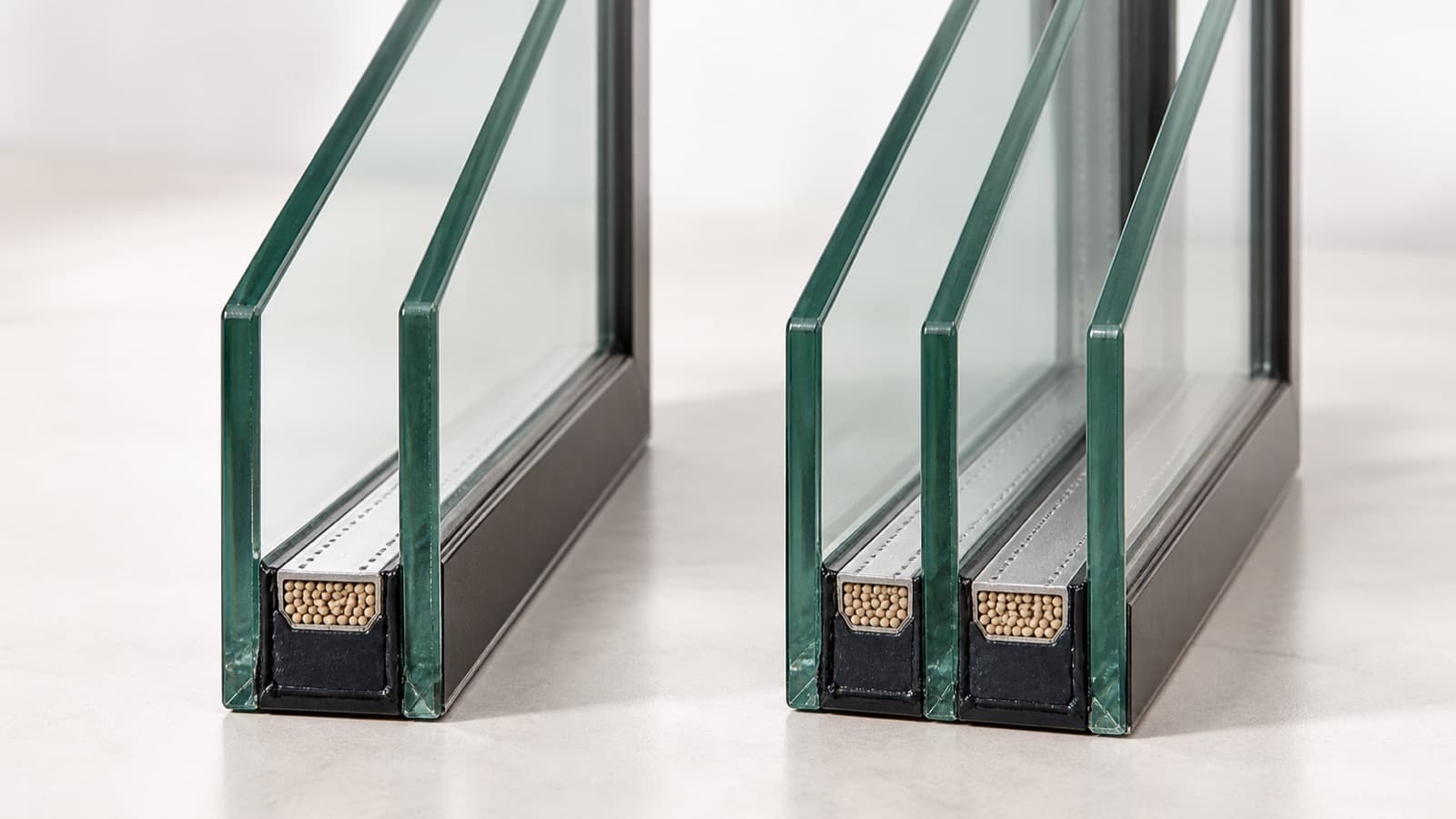
Triple-pane used to be the upgrade you bought for a cottage in Timmins. In 2026 several Ontario manufacturers ship it as their standard glass, and the price gap over double-pane has narrowed to a couple of hundred dollars a window. So is it worth it in London or the GTA? For some walls, clearly. For others, the money is better spent elsewhere. Here’s how to decide.
What the Third Pane Actually Does
A double-pane unit is two sheets of glass with a sealed, argon-filled gap and a Low-E coating. Triple-pane adds a third sheet and a second gap, usually with a second Low-E coating. The extra gap and coating roughly cut heat loss through the centre of the glass by a third. The frame and edge don’t change, which is why the whole-window improvement is smaller than the glass-only number.
The Performance Numbers
| Good double-pane (Low-E, argon) | Triple-pane (2 Low-E, argon) | |
|---|---|---|
| Whole-window U-factor | 1.4–1.6 W/m²·K | 0.8–1.1 W/m²·K |
| Energy Rating (ER) | Mid 20s to mid 30s | Mid 30s to mid 40s |
| ENERGY STAR® | Usually qualifies (U ≤ 1.22 or ER ≥ 34) | Qualifies; reaches Most Efficient (U ≤ 1.05 or ER ≥ 40) |
| Inside glass temperature at −20°C outside | About 8–10°C | About 13–15°C |
| Noise (STC) | 26–32 | 32–36 |
| Weight per sq ft of glass | About 3.3 kg | About 5 kg |
The inside-glass temperature line is the one you feel. Sitting beside a triple-pane window in January is noticeably warmer, and the glass tolerates 5 to 10 points more indoor humidity before it fogs. See our ratings guide for what the labels mean.
Cost Premium in 2026
Ontario pricing guides put triple-pane at 10 to 30 percent more than the same window in double-pane, and in the GTA that works out to roughly $150 to $300 per standard window. Several vinyl manufacturers now price triple as their base glass, which makes the premium zero if you were already buying that line. On a 15-window house, expect $2,000 to $4,500 extra.
Energy Savings and Payback
Be realistic. Windows are typically 20 to 25 percent of a house’s heat loss according to Natural Resources Canada, and triple-pane cuts window heat loss by a third or so versus a good double-pane. On a typical Ontario home with a $2,000 to $3,000 annual heating bill, published estimates land at $60 to $150 a year in savings over quality double-pane, more if you’re replacing old clear double-glazing or single-pane. That’s a payback of 10 to 25 years on the premium alone. If energy savings are the only reason, triple-pane over good double-pane is a marginal buy in southern Ontario. The case gets stronger with electric heat, a heat pump sized to the envelope, or a home with a lot of glass.
The Benefits That Aren’t on the Bill
- Comfort. No cold radiating from the glass, so rooms with big windows are usable in winter without cranking the thermostat.
- Condensation. Warmer inner glass means far less fog and frost, especially in bedrooms and bathrooms.
- Noise. A 3 to 5 STC improvement over double-pane; laminated glass does more, but triple helps.
- Rebates and ratings. ENERGY STAR Most Efficient effectively requires triple glazing, and some future incentive programs may target that tier.
- Resale. “Triple-pane windows” is a line buyers understand on a feature sheet.
Downsides
- Weight. A big triple-pane casement is heavy; over about 30 inches wide it needs reinforced vinyl or fibreglass to keep the sash from sagging.
- Slightly less light. Visible transmittance drops from around 0.60 to around 0.50. Most people don’t notice; north rooms may.
- Lower solar gain. A second Low-E coating cuts winter sun through south glass, which is a small loss in Ontario.
- Cost, if your manufacturer still treats it as an upgrade.
Where Triple-Pane Pays Off, Wall by Wall
Worth it
North and west walls. Bedrooms. Large picture windows and rooms with a wall of glass. Homes near traffic. Anywhere condensation is a recurring problem. Electric or heat-pump heated homes.
Optional
South-facing windows with useful winter sun. Small windows. Basement and garage windows. Homes you plan to sell within a few years.
Our Recommendation
If your manufacturer’s standard line is triple-pane, take it; the premium is gone and the comfort is real. If it’s a paid upgrade, put triple-pane on the north and west walls and the bedrooms, and standard Low-E double-pane on the rest. That captures most of the comfort and condensation benefit for about half the premium. And whichever glass you choose, spend first on a good frame, a warm-edge spacer, and a proper installation; a triple-pane unit foamed loosely into a leaky opening performs worse than a double-pane done right. Our cost guide has the rest of the pricing picture.
Want Both Glass Options Priced?
We'll quote double- and triple-pane for every opening so you can mix them by wall. No commission, no pressure.