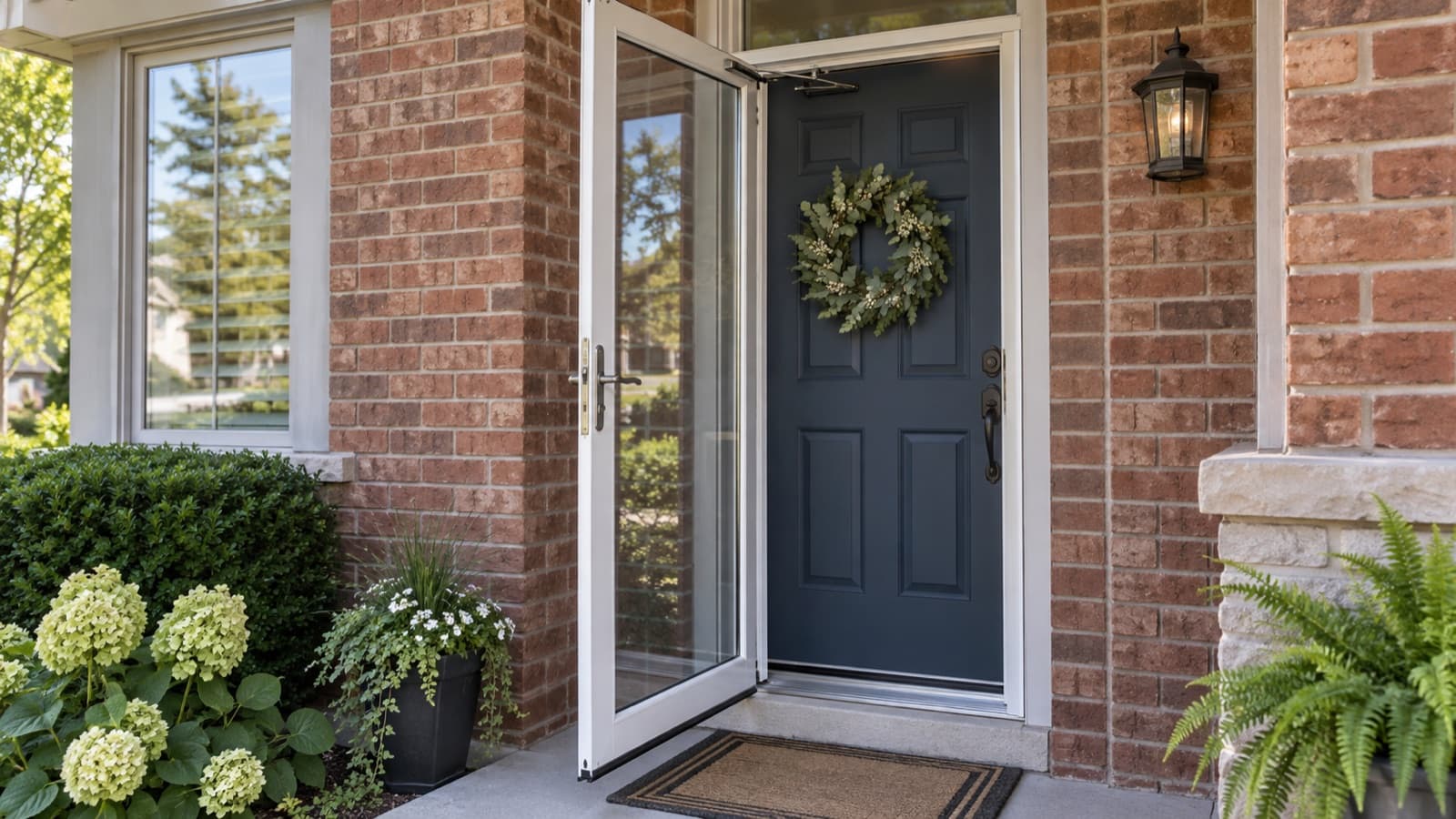
Storm doors are an Ontario tradition: the aluminum-and-glass door in front of the real door, swapped to a screen in May. They still make sense on some houses. On others, especially with a new fibreglass or steel entry door in full sun, they can quietly wreck the door behind them and void its warranty. Here’s when a storm door helps, when it hurts, and how to choose one if you need it.
What a Storm Door Does
A storm door adds a second layer with a dead-air space in front of the entry door. That air space adds a little insulation, and the outer door blocks wind, rain, and snow from hitting the main door and its weatherstripping. In summer, with the glass swapped for a screen, it lets you open the main door for ventilation while keeping bugs out. It also protects the finish of a wood door from weather.
When It Genuinely Helps
- An older, drafty entry door you’re not ready to replace. The storm door blocks wind and can make the foyer noticeably warmer for a few hundred dollars. See our drafty door guide for what else to try first.
- A wood door, which benefits from being sheltered from rain and sun.
- North- and east-facing doors with no overhang, exposed to wind and driven rain but not afternoon sun.
- Doors you want to open for ventilation and light, where a screened storm door acts as a big screen door.
- Homes with pets or kids who go in and out all day, where a lightweight outer door takes the abuse.
When It Does Harm: The Heat Trap
The space between a full-glass storm door and the entry door is a small greenhouse. On a sunny afternoon, with the sun on the glass, the air in that gap can climb well past 60°C, and some manufacturers cite temperatures above 90°C. A dark steel door in that pocket gets too hot to touch. Steel skins can bow, fibreglass skins can warp and their finish can blister, decorative glass inserts can crack, and the foam core can delaminate. The damage is permanent, and it’s the number one cause of warped entry doors we see on south- and west-facing homes with no porch roof.
The Warranty Problem
Most entry door manufacturers address this directly: their warranties exclude heat damage caused by a storm door, and several require that any storm door be a ventilating type or that the storm door be left open or vented when the door is in direct sun. Some void the finish and warp warranty outright if a storm door is fitted to a dark-coloured door on a sun-facing elevation. Before you add a storm door to a door still under warranty, read the warranty’s storm door clause, and keep the receipt for a ventilating model if you proceed.
Types of Storm Doors
Full-view
One large glass panel, swapped for a screen panel seasonally. Shows off the entry door. Highest heat build-up. Best on shaded or north doors.
Ventilating (retractable screen)
Glass slides down to reveal a built-in screen, so it can be vented without changing panels. The type most warranties call for. Best all-round choice.
Mid-view or high-view
Solid lower panel with glass above. Kick-proof, hides the bottom of the main door, less heat build-up. Best with pets and kids.
Security storm door
Steel frame and grille with a deadbolt. Blocks the view of the main door. Best where security is the priority.
Frames are aluminum (cheapest, can dent), fibreglass-reinforced vinyl, or heavy-gauge aluminum with a full-length piano hinge on premium models. Look for a closer with a hold-open, a bottom expander with a double sweep, and low-E glass if you’re buying for warmth.
Cost
In Ontario, a basic aluminum storm door installed runs about $350 to $700; a ventilating or premium model, $700 to $1,400. Installation is a couple of hours on a square, sound door frame. That’s a fraction of a new entry door, which is exactly why storm doors are popular, and exactly why people fit them where they shouldn’t.
Alternatives
If the goal is warmth, replacing the weatherstripping and sweep on the main door usually gets most of the benefit. If the goal is a screen, a retractable screen door mounted in the frame disappears when not in use and traps no heat. If the goal is protecting the door from sun and rain, a small porch roof or awning is the permanent fix and adds curb appeal. And if the main door is past saving, a new ENERGY STAR® certified entry door doesn’t need a storm door at all; see our steel vs. fibreglass guide.
A Simple Decision Rule
- Old or wood door, shaded or north-facing: yes, a storm door is worthwhile.
- Old door, sunny and unshaded: a ventilating storm door, kept vented in summer, or skip it.
- New steel or fibreglass door, shaded: optional; a retractable screen does the job with less bulk.
- New steel or fibreglass door, sunny: no, unless the manufacturer specifically allows a ventilating model. Protect your warranty.
Not Sure About Your Door?
We'll look at the exposure and the door you have and tell you honestly whether a storm door, a screen, or a new door makes sense. Free quotes in London and the GTA.